Nucleic acids are important biological molecules that contain genetic information and help cells carry out their functions. DNA and RNA are the two main types of nucleic acids, and understanding how they are built helps us understand how they differ and what roles they play.
What Are Nucleic Acids?
What allows a cell to carry genetic information? How is that information stored and used?
The answer begins with nucleic acids.
Nucleic acids are macromolecules that contain the genetic information needed for cellular functions and heredity. They are found in cells and also occur in viruses.
The name nucleic acid has its roots in the early study of cells. In 1869, Friedrich Miescher discovered an acidic substance in the nucleus of cells. He named the substance Nuclein.
Later, Richard Altmann suggested the term nucleic acid for the acidic substance with a high phosphorus content that Miescher had discovered.
The name comes from both where these substances were first found and their acidic nature. They were first identified in the nucleus, and they have acidic properties. This led to the term nucleic acid.
But nucleic acids are not made as one large piece. They are built from much smaller units.
The Building Blocks of Nucleic Acids
The smaller building blocks of nucleic acids are called nucleotides.
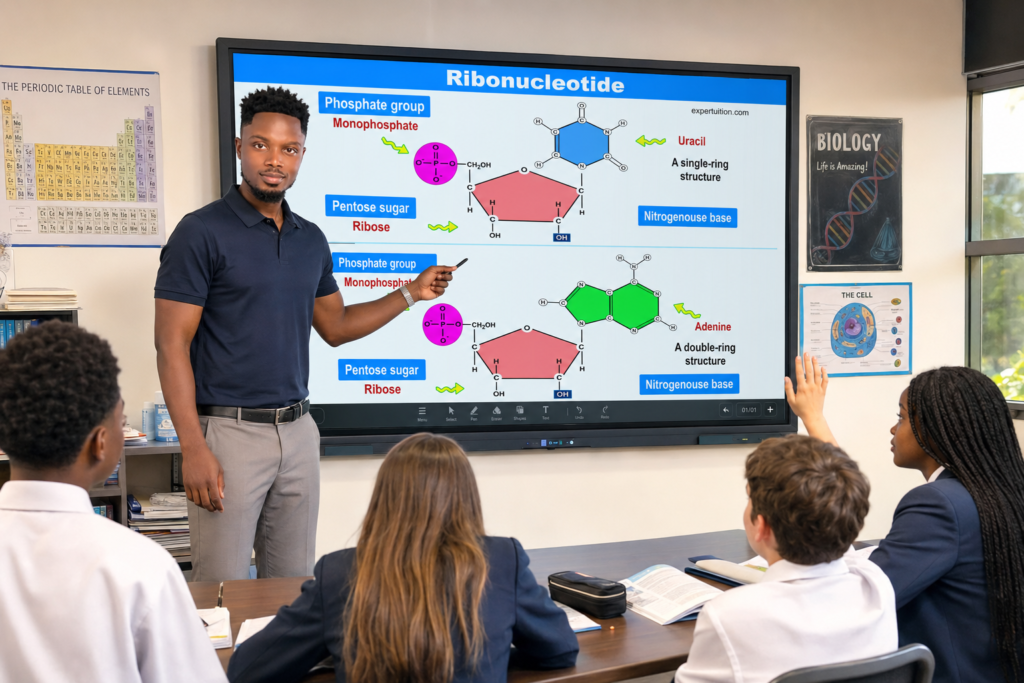
Each nucleotide has three distinct parts: a pentose sugar, a nitrogenous base, and a phosphate group.
The relationship between these parts is important. When a nitrogenous base joins with a sugar, the combination is called a nucleoside.
When a phosphate group joins with the nucleoside, it forms a nucleotide.
So, we can think of the process this way:
Nitrogenous base + sugar → nucleoside
Phosphate + nucleoside → nucleotide
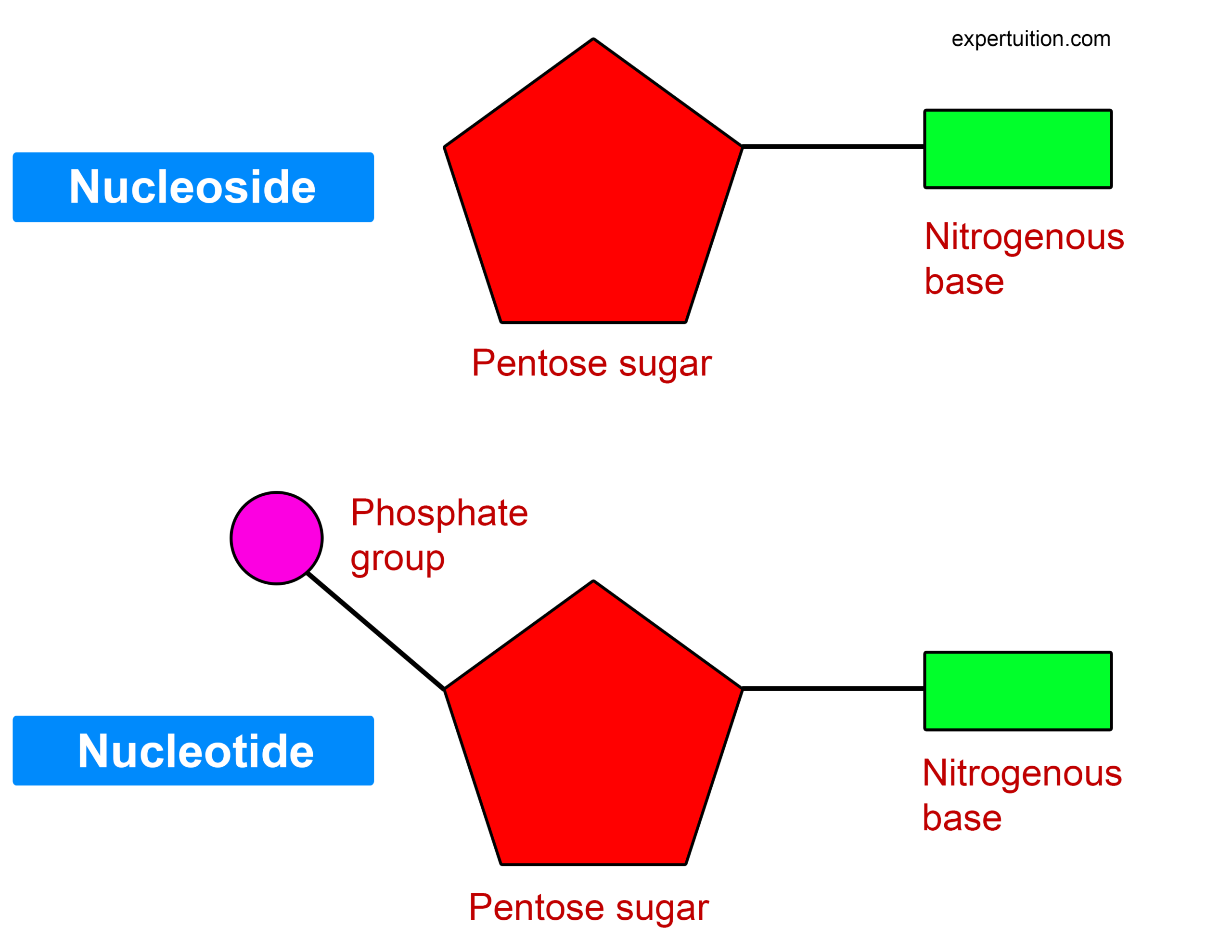
Many nucleotides can then join together to form a nucleic acid.
One of the most important parts of a nucleotide is the nitrogenous base. These bases help distinguish DNA from RNA and also play an important role in how nucleic acids are organized.
The Nitrogenous Bases in Nucleic Acids
There are five nitrogenous bases, also called nucleobases, found in nucleic acids: adenine (A), thymine (T), cytosine (C), guanine (G), and uracil (U).
These bases are divided into two groups based on their structures: purines and pyrimidines.
Adenine and guanine are purines. They have a double-ring structure.
Thymine, uracil, and cytosine are pyrimidines. They have a single-ring structure.
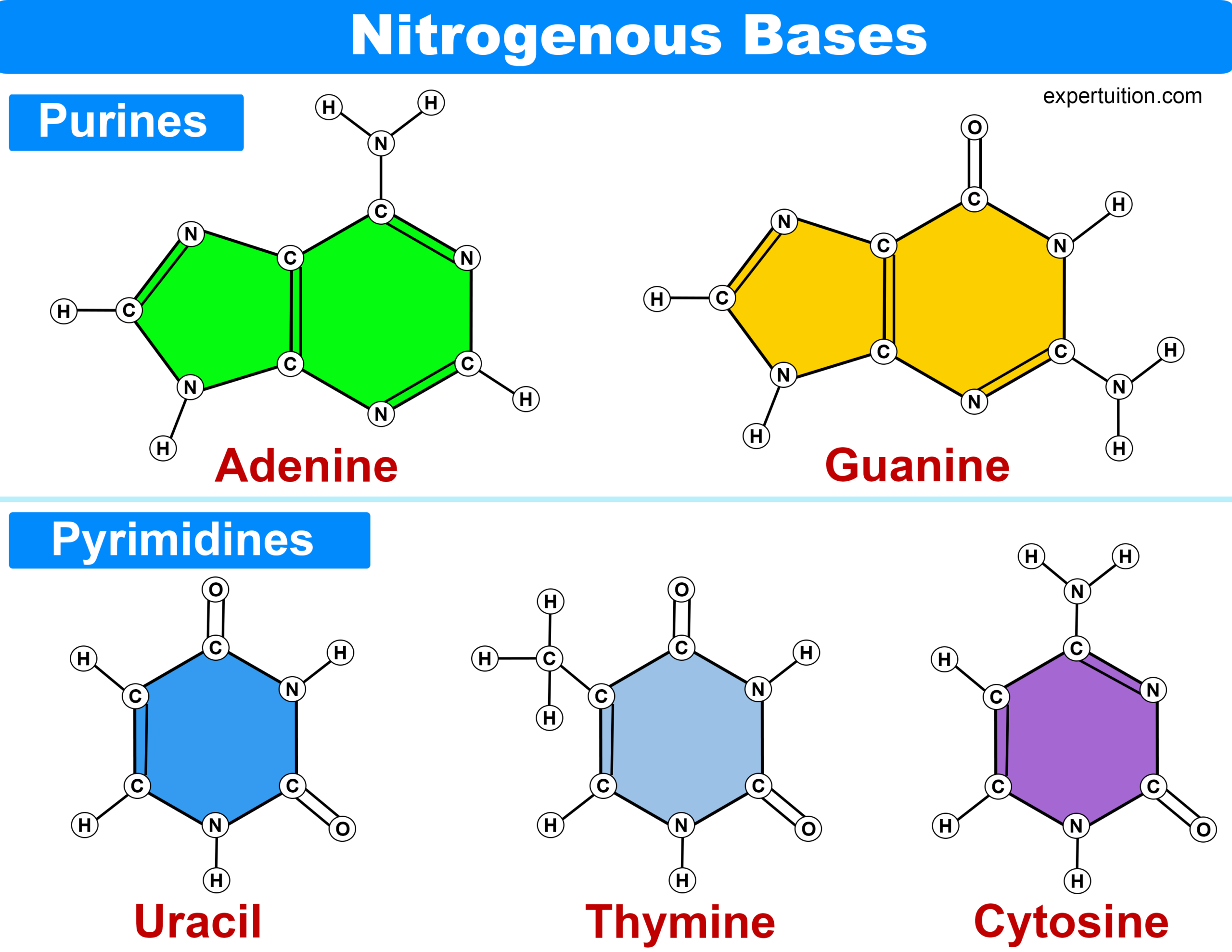
Not every nucleic acid contains all five bases. DNA and RNA use different sets of four bases. This difference will become important when we compare the two molecules.
DNA and RNA: The Two Main Nucleic Acids
There are two main types of nucleic acids: DNA, or deoxyribonucleic acid, and RNA, or ribonucleic acid.
They are closely related because both are made from nucleotides. However, they are not the same molecule.
One major difference is the type of sugar they contain. DNA has deoxyribose, while RNA has ribose.
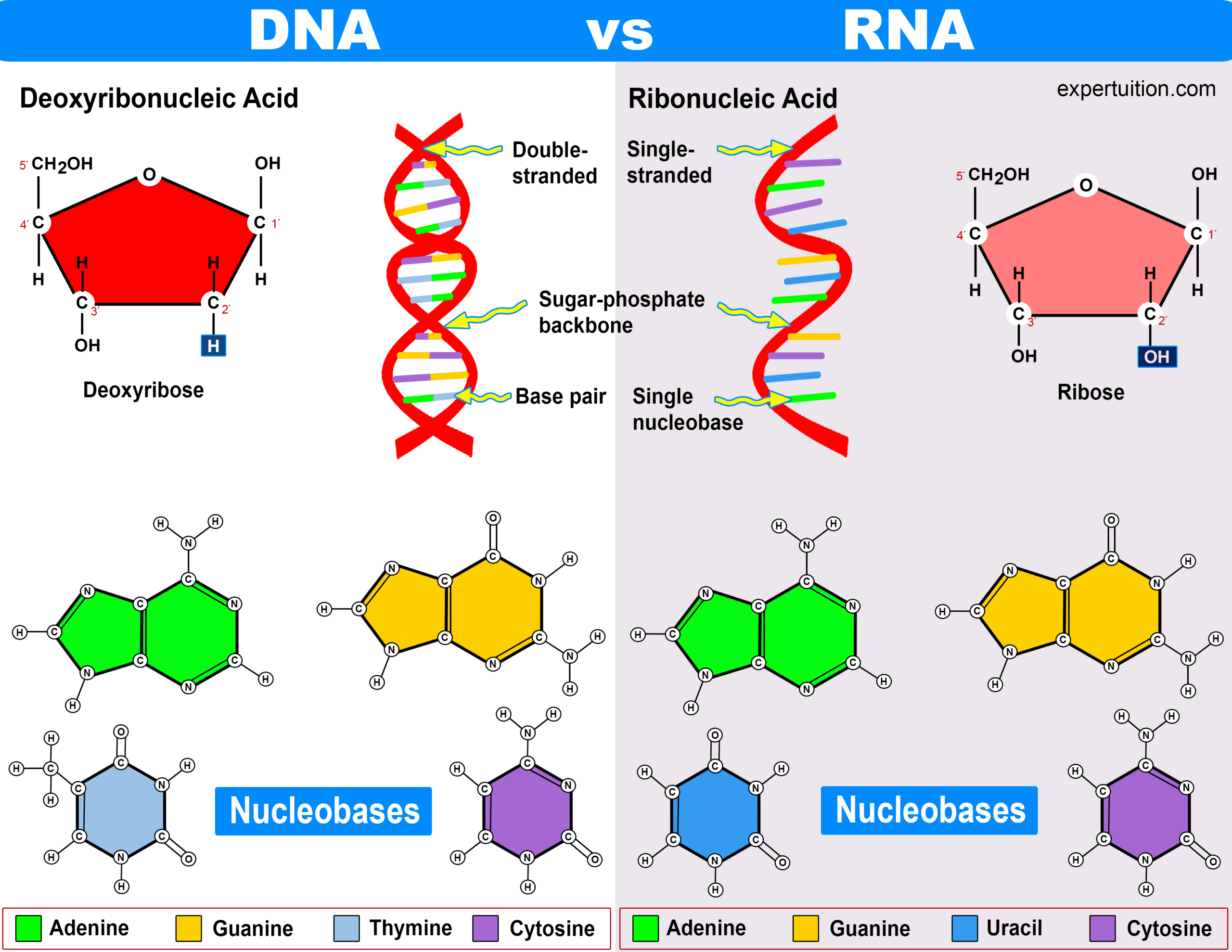
Their nitrogenous bases also differ. DNA contains adenine, thymine, cytosine, and guanine. RNA contains adenine, uracil, cytosine, and guanine.
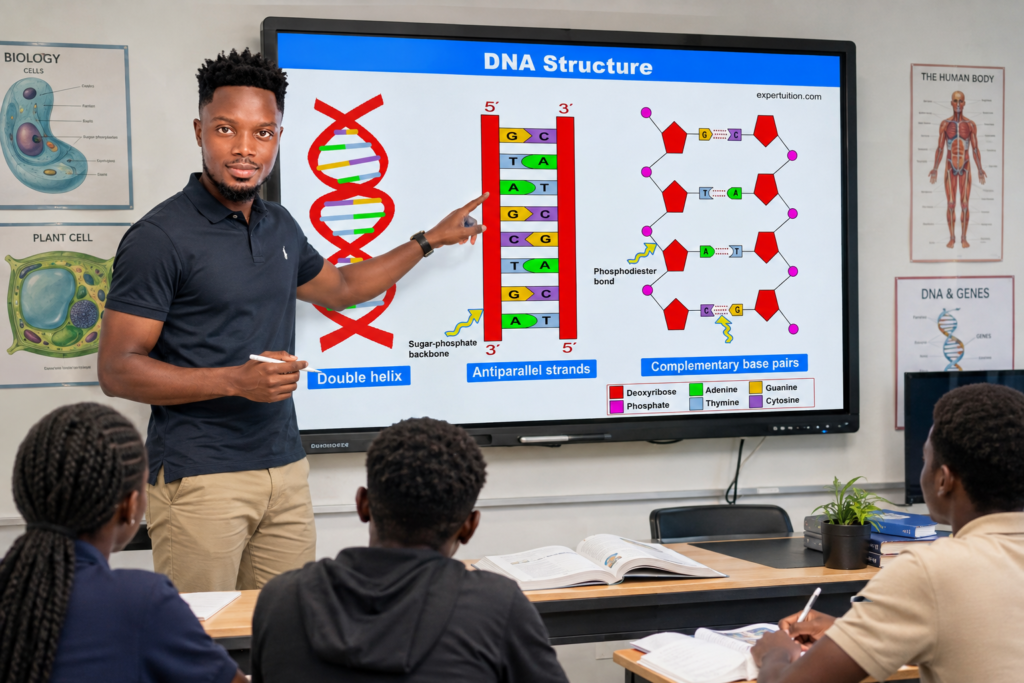
There is also a structural difference. DNA is double-stranded, while RNA is generally single-stranded.
Their roles are different as well. DNA acts as the carrier of genetic information, while RNA usually helps convert the information stored in DNA into proteins.
These differences are important, but DNA and RNA also have many features in common.
What Do DNA and RNA Have in Common?
DNA and RNA are both nucleic acids, and both can serve as genetic material. DNA is the genetic material in cells, while RNA serves as genetic material in some viruses.
They are both polymers made from smaller units called nucleotides. The nucleotides in both DNA and RNA contain a phosphate group, a pentose sugar, and a nitrogenous base.
Their nucleotides are also joined together by phosphodiester bonds.
Both molecules contain purines and pyrimidines. They also share three of their nitrogenous bases: adenine, cytosine, and guanine.
Another important similarity is their sugar-phosphate backbone. The sugar and phosphate groups form the backbone of the nucleic-acid structure, while the nitrogenous bases are attached to it.
So, DNA and RNA are built using many of the same basic components. The differences in those components, however, give the two molecules different structures and roles.
How Do DNA and RNA Differ?
The differences become clearer when we look at each feature more closely.
DNA contains deoxyribose, while RNA contains ribose. RNA has a chemically reactive hydroxyl (-OH) group on the 2′ carbon of its sugar ring, which is absent in DNA.
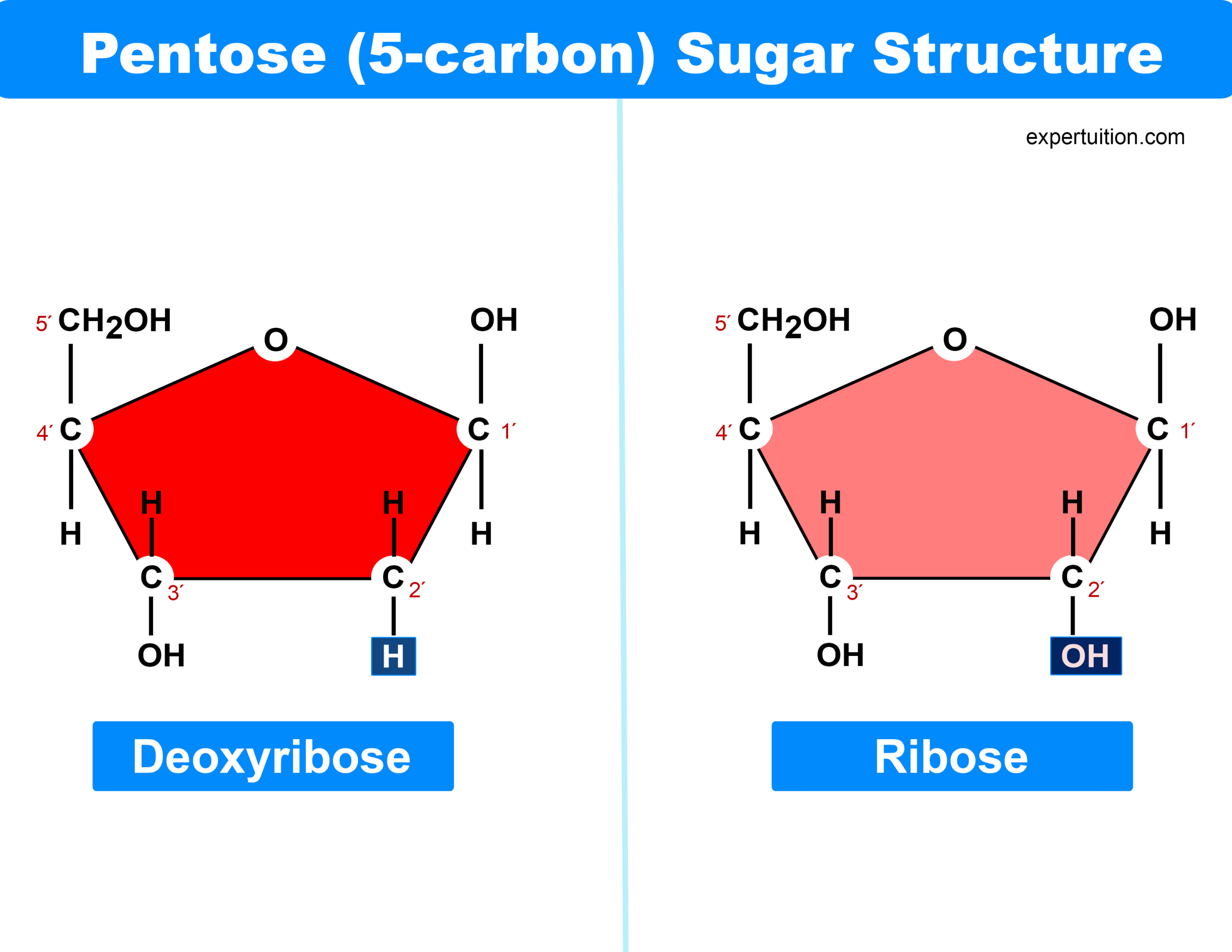
The bases provide another clear difference. DNA uses thymine, while RNA uses uracil. Both molecules contain adenine, cytosine, and guanine, but thymine belongs to DNA and uracil belongs to RNA.
Their structures are also different. DNA is a double-stranded molecule. Its two strands are held together through complementary base pairing. RNA is generally single-stranded, although some RNA molecules can form double-stranded regions.
This difference in structure is connected to the way the bases pair.
In DNA, adenine pairs with thymine, while cytosine pairs with guanine.
In RNA, adenine pairs with uracil, while cytosine pairs with guanine.
DNA and RNA also differ in their purine and pyrimidine relationships.
In double-stranded DNA, the number of purines is equal to the number of pyrimidines. In RNA, this equality is not generally required because most RNA molecules are single-stranded.
Their roles within cells are different too. DNA acts as the carrier of genetic information, while RNA usually helps use that information to make proteins.
RNA can also serve as a carrier of genetic information in some viruses. Some RNA molecules can also act as catalysts in biochemical reactions.
There is another important difference based on function. DNA is not divided into functional types such as messenger RNA (mRNA), ribosomal RNA (rRNA), and transfer RNA (tRNA). These are different functional types of RNA.
Finally, DNA and RNA differ in their overall size. DNA molecules are comparatively long structures with a high molecular weight. RNA molecules are often comparatively shorter structures with a lower molecular weight, although RNA molecules can vary considerably in size.
These differences help explain why DNA and RNA have different roles even though they belong to the same family of molecules.
DNA and RNA at a Glance
A quick comparison can help bring the main ideas together:
| Feature | DNA | RNA |
| General role | Carries genetic information | Helps use genetic information to make proteins |
| Main location | Mainly in the nucleus | Mainly in the cytoplasm |
| Structure | Double-stranded | Usually single-stranded |
| Sugar | Deoxyribose | Ribose |
| Bases | A, T, C, G | A, U, C, G |
| Base pairing | A–T; C–G | A–U; C–G |
| Purines and pyrimidines | Equal in number | Not necessarily equal |
| Functional types | One type based on function | mRNA, rRNA, and tRNA |
| Relative size | Usually longer | Often shorter |
The table is useful for review, but the differences become much easier to remember when we understand why the molecules are different rather than simply memorizing a list.
Putting It All Together
Nucleic acids are built from nucleotides, and those nucleotides provide the basic structure of DNA and RNA.
DNA and RNA share important features. They are both nucleotide polymers. Both contain a sugar, a phosphate group, and nitrogenous bases. Both contain purines and pyrimidines, and both have a sugar-phosphate backbone.
At the same time, they have important differences. DNA contains deoxyribose and thymine and is double-stranded. RNA contains ribose and uracil and is usually single-stranded.
Their roles also differ. DNA acts as the carrier of genetic information, while RNA usually helps use the information stored in DNA to make proteins.
Once these basic differences are clear, it becomes easier to understand why each molecule has the structure it does.
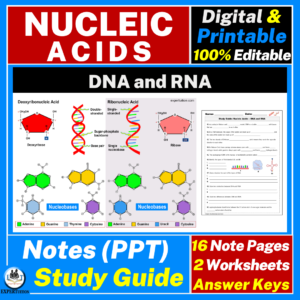
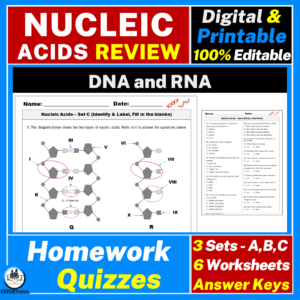
For teachers, the editable PowerPoint and PDF/study guide that accompany this material can provide a convenient way to present or review these concepts with students. The accompanying review/assessment can then give students the opportunity to review the ideas and check their understanding of nucleic acids.
But DNA deserves a closer look.
How can a molecule made of nucleotides form such a complex structure? How did scientists work out the shape of DNA? What holds its two strands together? And how does such a long molecule fit inside a cell?
These questions take us to the next part of the story: DNA, its history and structure, and the remarkable way it is packaged inside the cell.
Nucleic Acids Resources