February-themed word problems are a great way to bring the spirit of the month into your math lessons. From Valentine’s Day to Black History Month themes, February offers many meaningful, real-world contexts for problem-solving. Let’s explore how these themes can boost your students’ skills and excitement for math this month!
Why Use Themed Word Problems in February?
Real-World Connections Build Relevance
Math can sometimes feel disconnected from students’ daily lives, especially when worksheets are full of isolated numbers with no real meaning.
When we bring in contexts like seasonal weather predictions, expressions of kindness, important historical figures, health awareness, and everyday routines, math becomes more than just computation.
These familiar and meaningful settings help students connect addition, subtraction, multiplication, and division to situations they understand and care about, deepening comprehension and retention.
Themed Storytelling Promotes Critical Thinking
The power of February-themed word problems lies in the story behind the numbers.
Whether students are reasoning through a Groundhog Day prediction, planning Valentine’s acts of kindness, analyzing presidential history facts, or exploring heart health and dental routines, they’re asked to interpret a scenario, choose operations thoughtfully, and make sense of their results.
This kind of reasoning, moving beyond simple calculation to thoughtful problem-solving, cultivates deeper mathematical thinking and builds confidence in multi-step reasoning.
Seasonal Motivation and Mid-Year Engagement
February can often feel like a challenging time to keep momentum. The year is halfway through, winter may linger, and students might be ready for a change of pace.
Themed math gives them a reason to look forward to math time again.
When lessons incorporate familiar celebrations, history, health, and real-life themes, students are more likely to engage actively and enjoy the process of solving problems.
Practical Ways to Use February Word Problems
Morning Warm-Ups or Bell Ringers
Begin your math block with a short, February-themed problem, perhaps tied to weather predictions, a kindness project, or a health awareness concept.
These quick prompts help transition students into math thinking, reinforcing essential skills while connecting to meaningful month-long themes.
It’s a simple, effective way to make every math day start with intention and relevance.
Math Centers or Rotations
Use themed task cards in centers for partner or small-group work.
With February themes like friendship, history, health, and seasons, students can discuss scenarios, plan solutions collaboratively, and support each other’s reasoning.
Centers encourage communication, different strategies, and deeper understanding, giving students a chance to learn from peers as they apply one-step and multi-step problem-solving.
Whole-Class Problem-Solving
Bring the class together to tackle one rich, February-themed scenario.
It might integrate history, health, environment, or social awareness, depending on the theme of the day.
Encourage multiple approaches, discussion of reasoning, and reflection. This builds a strong math talk culture and helps students see that there’s often more than one way to arrive at a solution.
Individual Practice or Homework
Assign themed word-problem worksheets for students to complete independently, either in class or at home.
Whether one-step or multi-step, these problems anchor math in real-world contexts favorable to February, giving students meaningful practice beyond isolated drills.
This approach supports fluency, reasoning, and application of skills, building confidence and independence.
Spotlight on February Math Themes
Groundhog Day
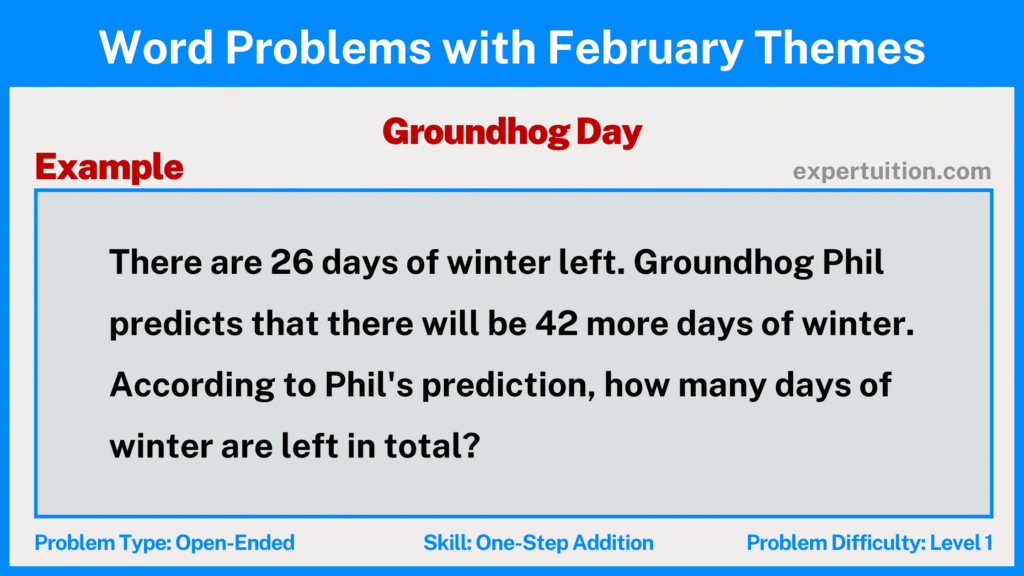
February’s start brings the fun tradition of Groundhog Day, which is perfect for integrating math with weather, predictions, and seasonal observations.
Using this theme, students can explore ideas of time, prediction vs. reality, shadows, and seasonal changes.
These contexts allow for operations that support reasoning about time, comparisons, and interpretations, making math feel connected to the world around them.
Valentine’s Day
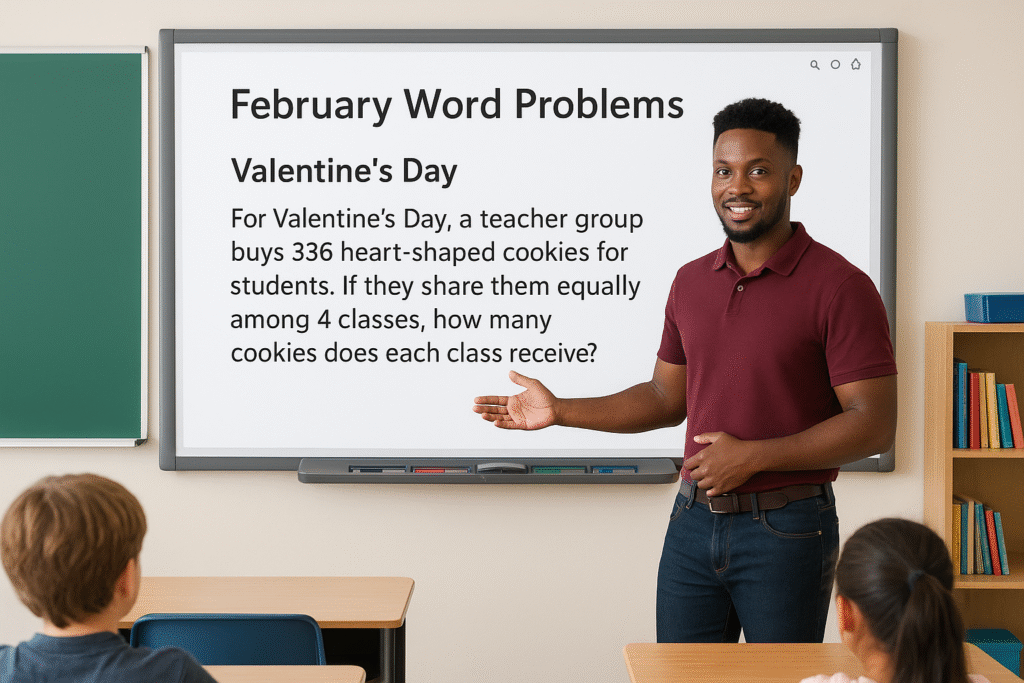
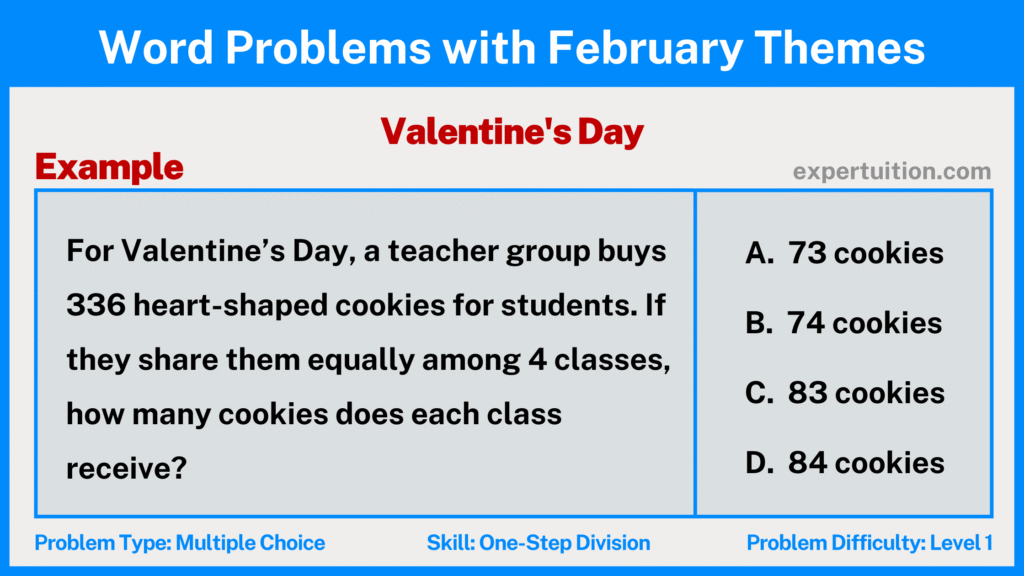
Valentine’s Day offers heartwarming opportunities to weave math with expressions of kindness, sharing, and community.
Through this theme, students encounter scenarios involving sharing, counting, grouping, and planning, all while practicing foundational operations.
It’s a gentle, meaningful way to reinforce math skills while fostering empathy, kindness, and social connection in the classroom.
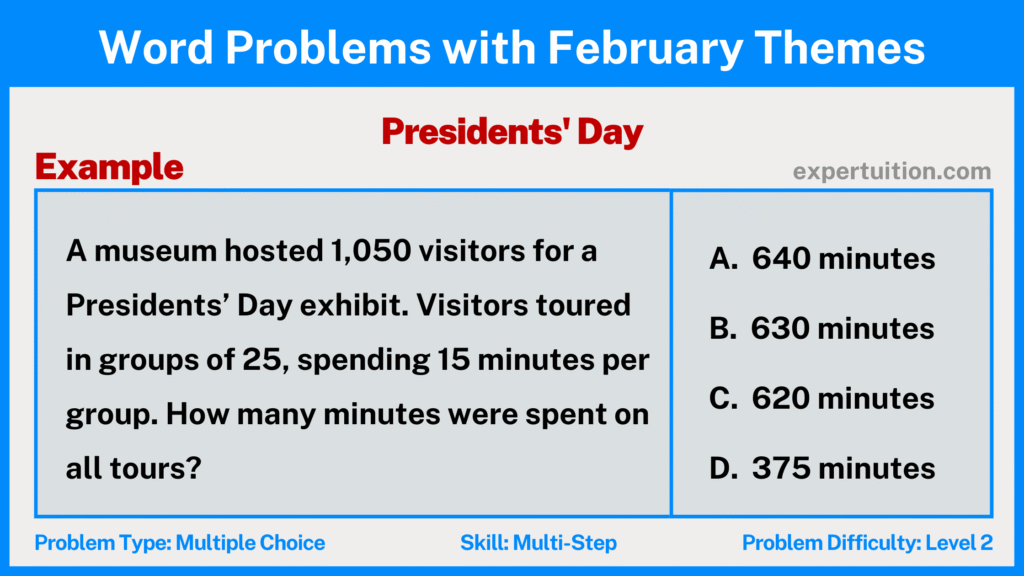
Presidents’ Day
Honoring historical leaders and exploring the past, Presidents’ Day is a great springboard for math problems tied to history, time, budgeting, and facts.
This theme connects math with social studies: timelines, comparisons, data interpretation, and logical reasoning.
It helps students see math as a tool to understand history and civic ideas, enriching learning beyond numbers.
Black History Month
Celebrating achievements, culture, heritage, and resilience, Black History Month offers deep, meaningful contexts for mathematical thinking.
Whether exploring data, comparing contributions, analyzing timelines, or reflecting on important events, students can use math alongside social awareness and historical understanding.
This theme fosters cross-curricular learning and helps students appreciate both math and identity.

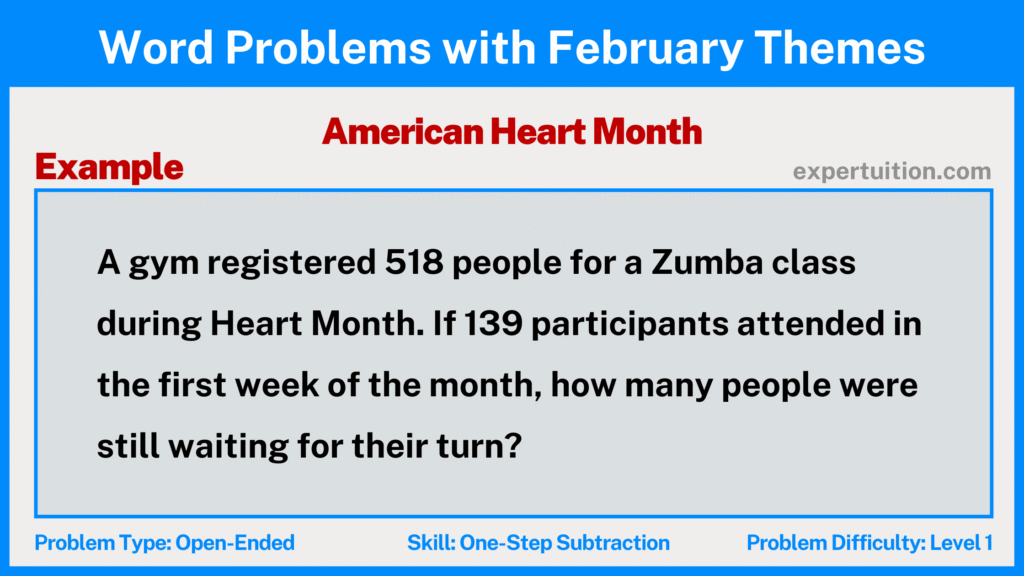
American Heart Month
February is also a month to focus on health, wellness, and understanding our bodies.
With heart-health themes, students can engage in measurement, growth tracking, comparison, and data-based reasoning.
Math becomes a part of learning about health, combining science and mathematics in a way that nurtures both body and mind.
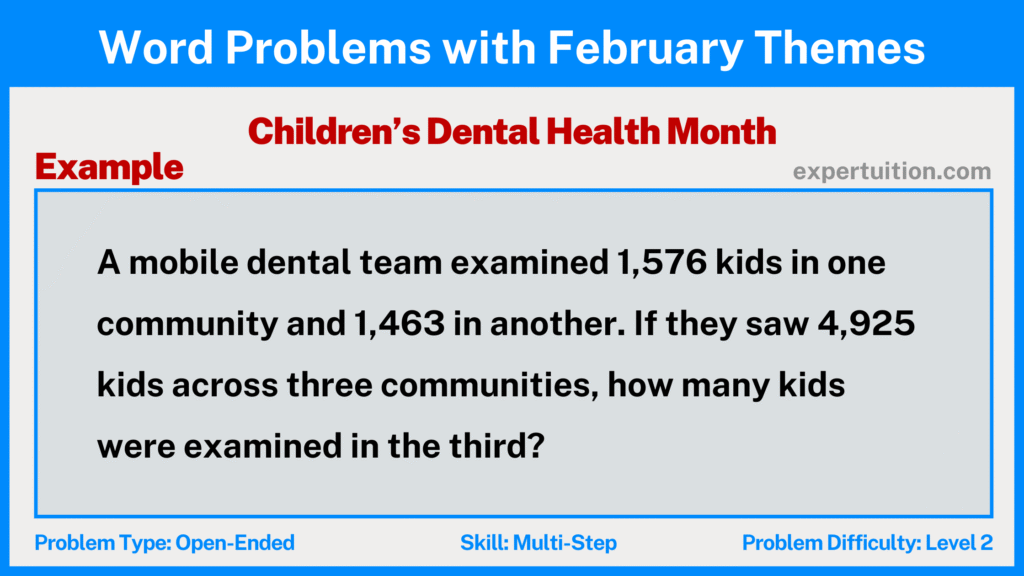
Children’s Dental Health Month
This theme brings everyday routines like brushing, nutrition, and hygiene into math class.
Students can explore timing, frequency, comparisons, and planning all through relatable, life-applicable scenarios.
These problems help children see math’s role in health and daily life, reinforcing operations while building awareness of self-care.
Worksheets vs. Task Cards: Which Format Fits Your Classroom Best?
Worksheets for Structured Practice
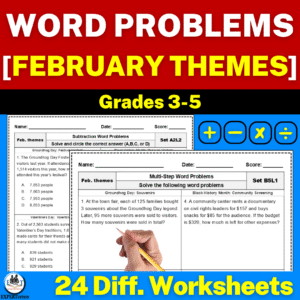
February Worksheets are ideal when you want focused, independent practice, whether during class, homework, or review sessions.
They allow students to work through one-step and multi-step word problems tied to February themes, building fluency and reasoning in a structured form.
With answer keys and data tracking options, the worksheets help you monitor progress and adjust instruction where needed, without losing the real-world relevance.
-
 $ 6.99
Task Cards for Movement and Collaboration
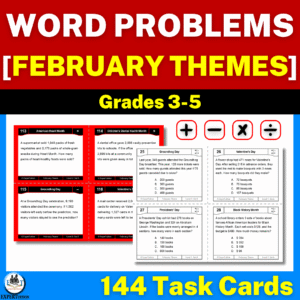
February Task Cards bring flexibility back into the math block.
Use them in centers, partner work, or rotations. They are perfect for engaging students in discussion, strategy sharing, and collaborative problem-solving.
With both one-step and multi-step problems across varied themes, the cards keep math dynamic and interactive, especially useful when classroom energy is high.
-
$ 6.99
Make February a Month of Meaningful Math
February offers a unique blend of celebration, history, wellness, and reflection, and math can be right at the heart of it.
By weaving February-themed word problems into your lessons, you’re not only reinforcing computational skills, but you’re helping students connect math to life, values, and real-world thinking.
If you’re ready to bring deeper engagement to your math block, consider February-themed word problem worksheets and task cards.
They’re designed to save you prep time while giving your students meaningful, relevant, and challenging math practice all month long.