September-themed word problems are a great way to bring that back-to-school energy into your math lessons. From Labor Day and Back-to-School routines to Fall Harvest themes, September offers plenty of meaningful, real-world contexts for problem-solving. Let’s explore how these word-problem themes can boost your students’ skills and excitement for math this month!
Why Use Themed Word Problems in September?
Real-World Connections Build Relevance
When students start the year, many of their math tasks can feel disconnected from what they’re experiencing.
By using contexts like new school routines, sports schedules, harvest counts, or Labor Day tasks, you transform math from abstract into something they recognize.
These familiar settings give meaning to addition, subtraction, multiplication, and division, helping students anchor new or reviewed skills in real-life situations.
Themed Storytelling Promotes Critical Thinking
The power of themed word problems lies in the narrative.
When students solve problems that involve back-to-school scenarios, sporting events, reading goals, or outdoor harvest counts, they must interpret a situation, plan a method, and reflect on their reasoning.
That kind of thinking, going beyond mere calculation, strengthens true problem-solving ability.
Boosting Motivation at the Start of the Year
September brings fresh routines, new classmates, and often renewed enthusiasm.
It’s the perfect time to harness that momentum in your math block. Themed problems tap into that excitement and channel it into purposeful learning.
When students encounter word problems that feel timely and relevant, they’re more likely to engage and maintain focus.
Practical Ways to Use September Word Problems
Morning Warm-Ups or Bell Ringers
Begin math blocks with a short, themed word problem that aligns with September, like sports schedules, reading milestones, or fall weather.
These quick prompts prime student thinking, reinforce essential skills, and set a positive tone for focused work.
Math Centers or Rotations
In small-group rotations or centers, themed task cards add movement, conversation, and shared reasoning.
Students might collaborate on problems tied to fall harvest counts, new school supplies, or labor tasks, giving them a chance to talk through their approaches and build deeper understanding together.
Whole-Class Problem-Solving
Bring your class together to tackle one rich, September-theme context.
For example: mapping out a sports tournament, budgeting classroom supplies, or analyzing a fall weather event.
Encouraging students to share their strategies, ask “Why did you choose that operation?” and compare approaches builds mathematical discourse and reinforces reasoning.
Individual Practice or Homework
Assign themed word-problem worksheets for students to work independently or at home.
With one-step and multi-step problems anchored in September’s real-life contexts, students get meaningful practice that connects to their world.
This kind of independent work helps them build fluency, reasoning, and confidence outside of coached instruction.
Spotlight on September Math Themes
Labor Day
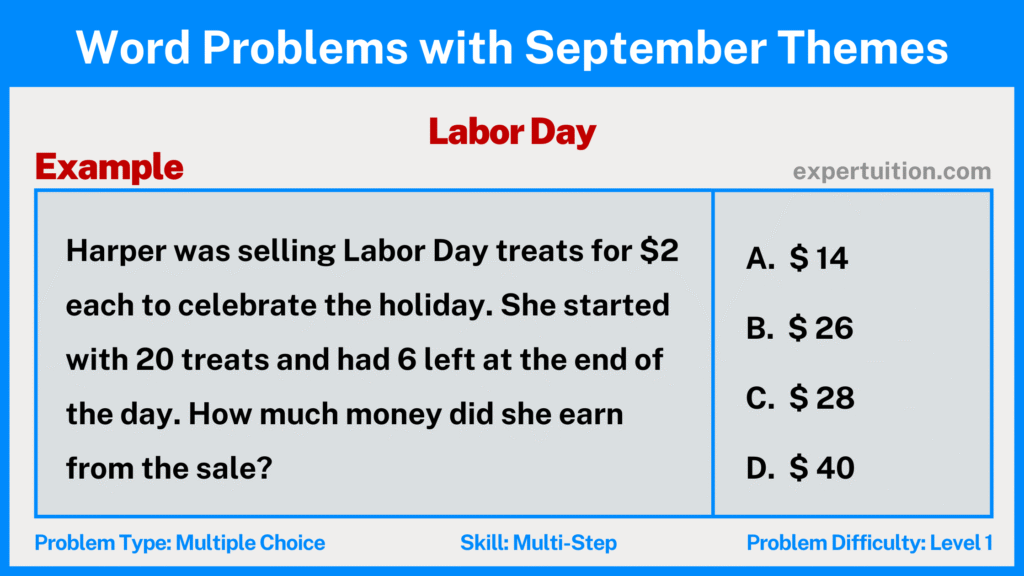
September begins with Labor Day, a meaningful theme for math.
Whether it’s organizing tasks, budgeting time, or comparing work effort, this context invites math that connects to real-life workplace or school-team analogies.
It gives students the chance to think about operations in terms of time, efficiency, and contribution, reinforcing their understanding of division, multiplication, and addition in authentic situations.
Back-to-School
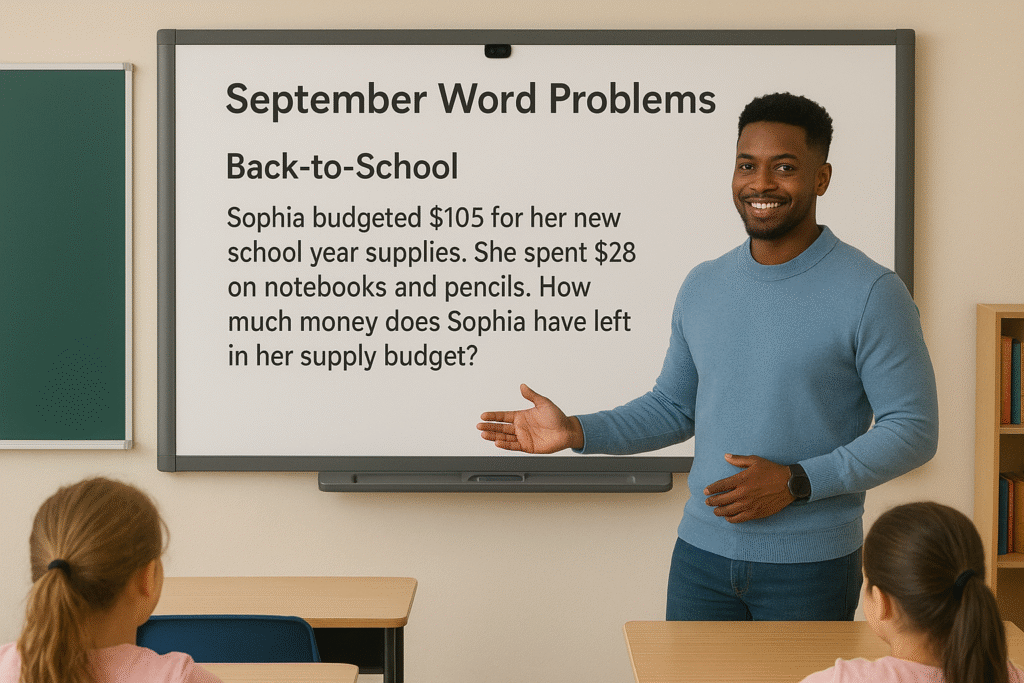
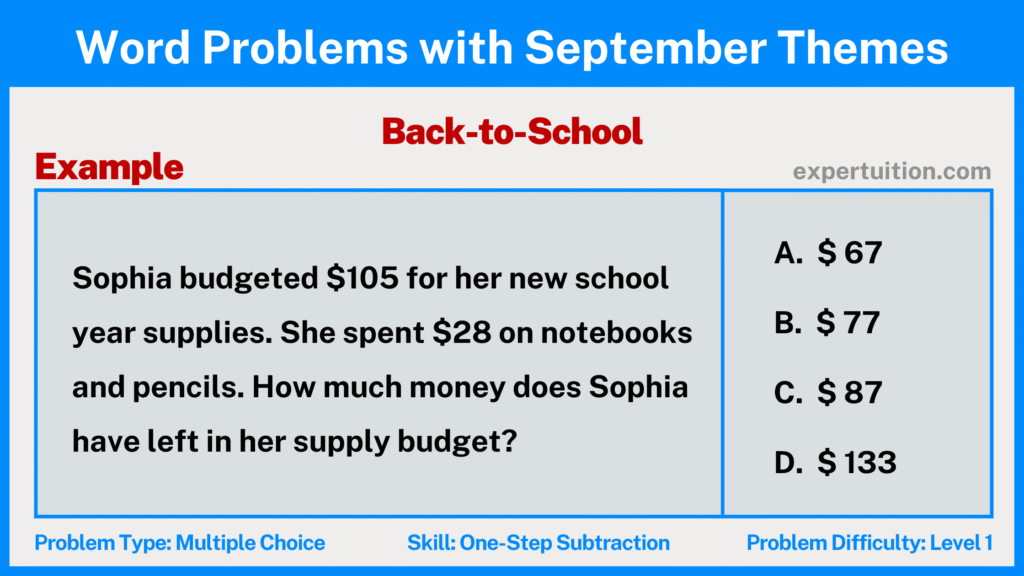
This theme resonates powerfully with students at the start of the year.
Think routines, supplies, teams, and schedules. Math problems tied to this theme help transition students into the year by connecting what they’re doing right now to mathematical thinking.
It’s an excellent way to review key operations while anchoring them in their classroom experience and goals.
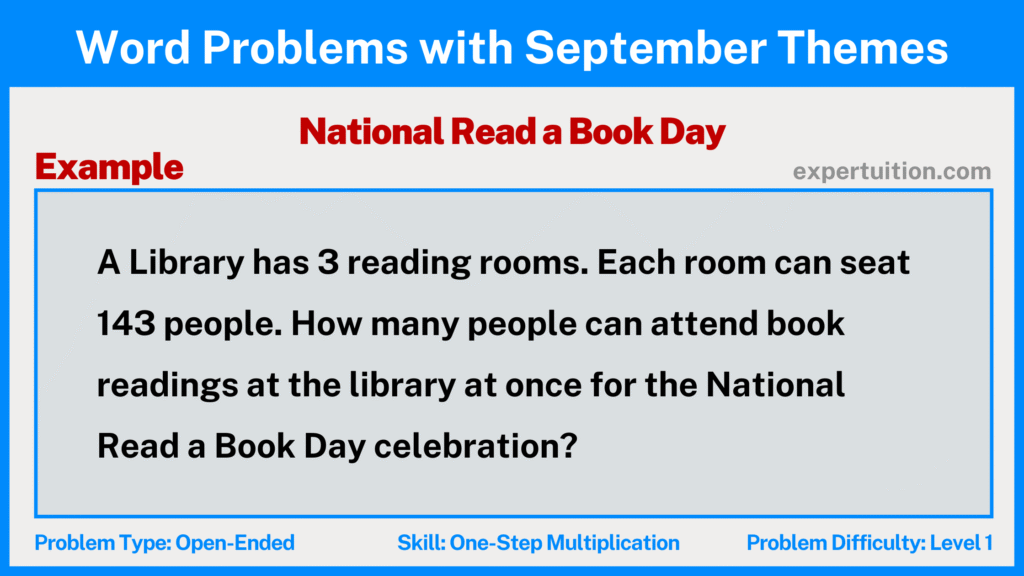
National Read-a-Book Day
When we tie math to literacy themes, we build cross-curricular strength.
September’s Read-a-Book Day inspires contexts like reading goals, comparing pages, or tracking time spent reading.
These scenarios encourage students to apply operations while also thinking about data, comparisons, and progress, making math feel relevant across subjects.
Sports
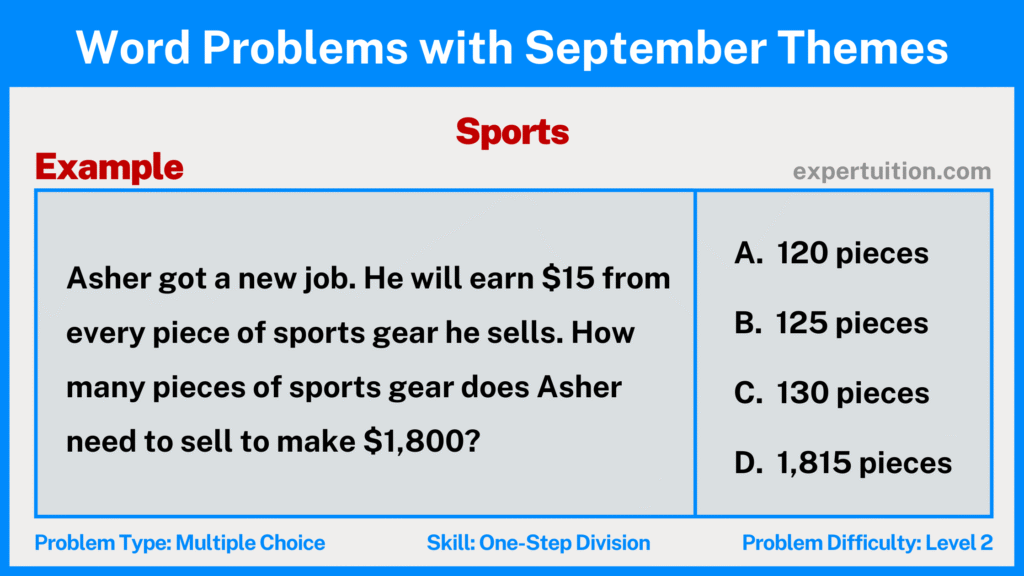
Early-fall sports bring energy into the classroom.
Whether it’s tracking scores, comparing team performance, calculating playtime, or dividing equipment, sports offer rich math contexts.
Students who love sports see themselves in the problem, boosting engagement, while still working on one-step and multi-step operations and reasoning.
Weather Seasons (Fall)
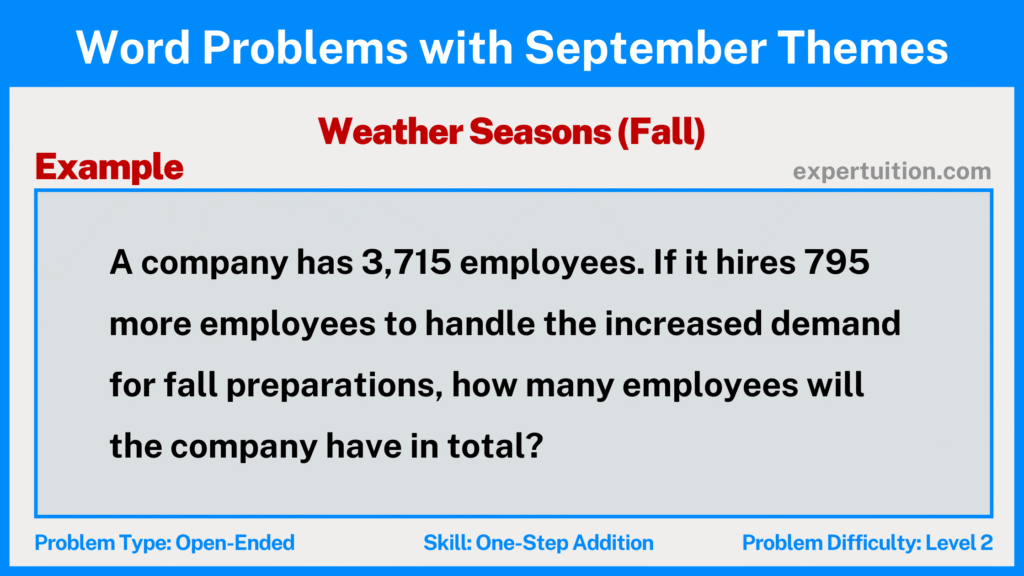
September’s shift into fall provides great math hooks such as changes in temperature, rainfall, daylight hours, and harvest yields.
Problems built around these contexts allow students to explore measurement, compare data, interpret information, and apply operations in meaningful seasonal ways.
Fall Harvest
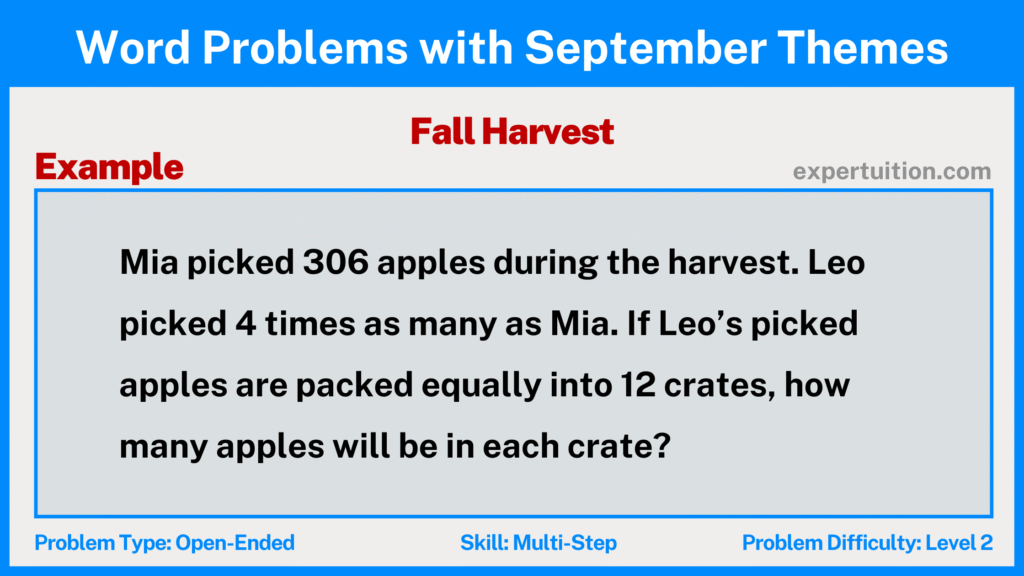
Finally, the fall-harvest theme taps into the natural world, community, and abundance.
Whether it’s counting produce, dividing harvest shares, comparing yields across days or students, or calculating growth, these contexts bring math into students’ lived experiences.
Harvest-themed problems help reinforce multiplication, division, and multi-step reasoning in a tangible way.
Worksheets vs. Task Cards: Which Format Fits Your Classroom Best?
Worksheets for Structured Practice
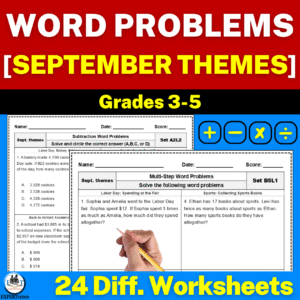
Themed Worksheets are ideal when you want focused, independent practice, whether during class, homework, or review.
They offer a consistent, scaffolded way for students to work through one-step and multi-step problems anchored in September’s themes.
Built-in answer keys and tracking make it easy for you to monitor progress and adjust instruction for students who need support.
-
 $ 6.99
Task Cards for Movement and Collaboration
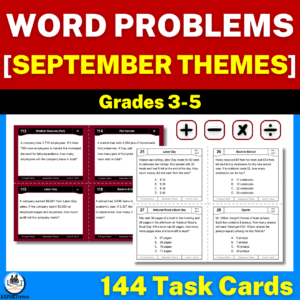
Themed Task Cards bring flexibility and interaction: great for centers, partner work, or stations.
Students can move through problems about sports, harvests, or school routines, sharing their thinking and working collaboratively.
These formats keep students active and engaged while still doing meaningful math work.
-
$ 6.99
Start the Year Strong with Real-World Math
September is full of fresh starts, routines, goals, and community, and math can be right in the heart of that.
By weaving September-themed word problems into your lessons, you’re helping students build number sense, reasoning, and confidence all through contexts they recognise.
When students see math connected to their lives, they don’t just solve problems; they think, explore, and grow.
If you’re ready to bring meaningful, engaging math into your classroom this month, explore the September-themed word problem worksheets and task cards in my ExperTuition store.
They’re designed to help your students practice operations, grow in reasoning, and love math all month long.